
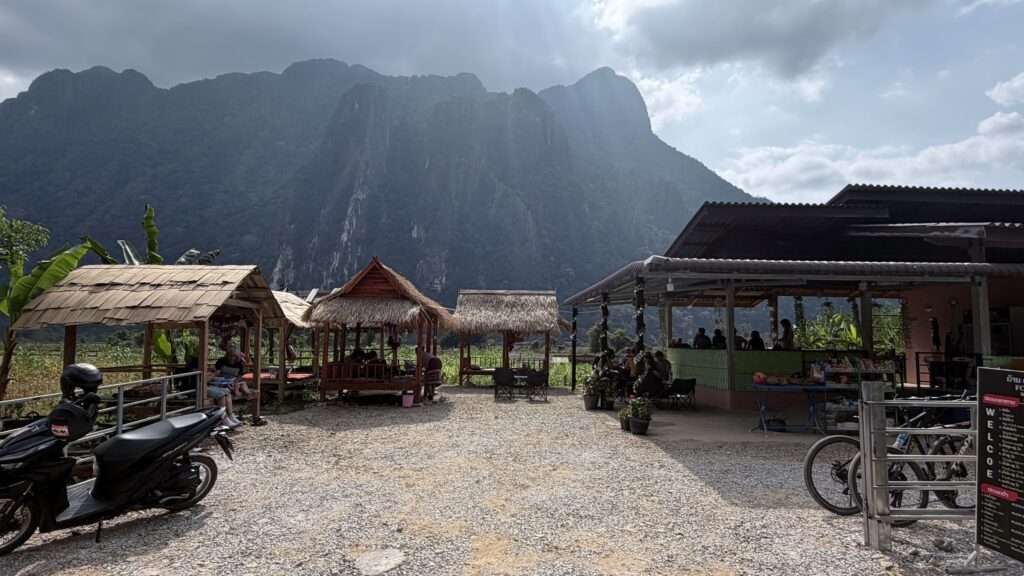
I wish I had decided to visit Laos earlier
Let’s be honest – Laos is far from being the first choice for most of us when thinking about Southeast Asia. Thailand? Vietnam? Cambodia? Laos is usually just an add-on to the list, and here’s why…
… why I believe that’s wrong!
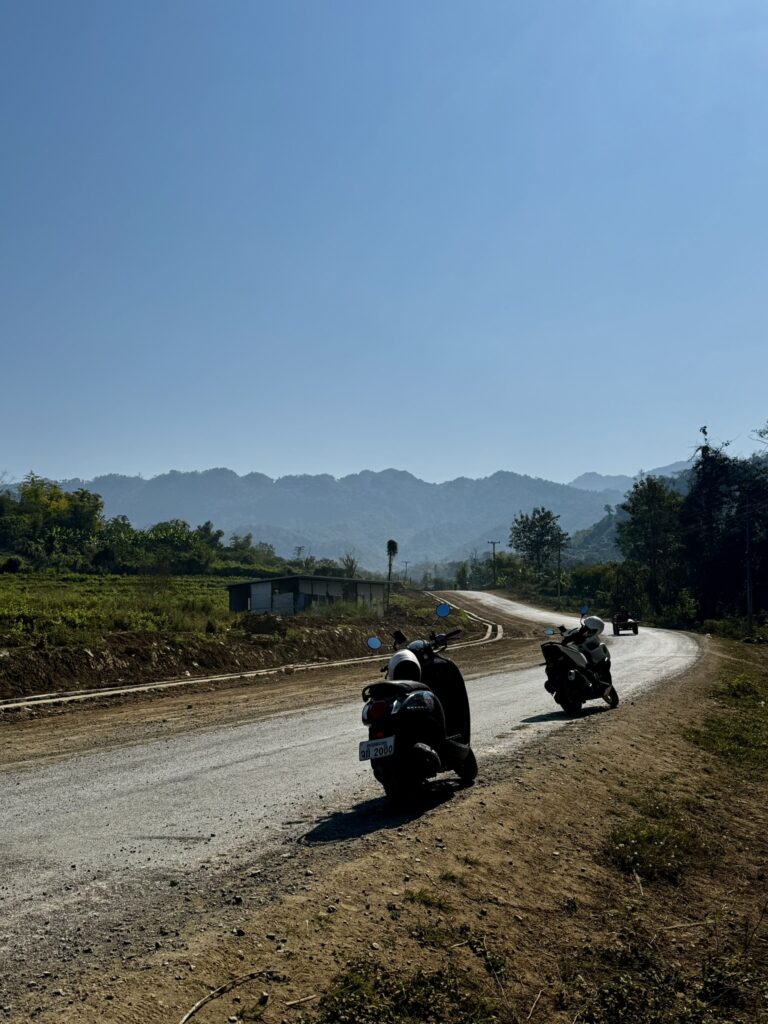
Table of Contents
Laos is definitelly an option for travellers who want to time-travel back to when our lives were not dominated by technology and haste. It’s unbelieveable how slow life in Laos is. What was suprising to me is that it doesn’t feel disturbing and I actually really enjoyed it.
Laos – general information
Laos covers 236,800 km² with around 7,9 mln people living there. Compared to neighboring Vietnam or Thailand the numbers aren’t impressive, but there’s a story behind these statistics. About 78% of Laos is covered by jungle forest, although deforestation has become more noticable recent years. Combined with its mountainous terrain and poor road conditions, travelling around Laos becomes a…. well… unique experience. Laotians say it takes 4 hours to drive 100 km, giving you a stunning 25 km/h average speed. A bit slower that we would expect in Europe, isn’t it? Of course, it may take even longer if there’re big trucks on the road or a wandering herd of buffallo that completely ignores cars and scooters. Believe me – forget ‘haste’ or ‘speed’ and just enjoy Laos and it’s alternative approach to time and schedules!
You can read more about driving in Laos on our other posts. And yes, it’s safe. I’d even dare to say it’s safier than, for example, Vietnam. Why so? Well, travelling in Laos is so slow not because of the traffic. It is the roads. Or should I say, the road-like creations that make you slow down and forget you ever liked speed. Maybe if they just had dusty or gravel roads that wouldn’t be an issue. I guess it’s not that difficult to keep an average speed of 30-40 km/h even if it’s an unpaved road. In Laos, however, the authorities try to use asphalt. The trick is asphalt doesn’t seem to like Laos’ weather. It cracks spontaneously creating literally 40cm deep craters, spread randomly here and there along the track. This makes the cars slow down to a near full-stop, otherwise suspension would simply break. As a result, 25 km/h is a solid calculation for regular driving average speed in Laos and – trust me – there’s absolutely nothing you can do about it.
When to visit?
Speaking of weather, there’re two main seasons in Laos – wet season, May to October, and dry season which is exactly when you want to visit Laos. Dry season starts in late October and lasts until March. Some say late February the high season is already over, but Laotians say it varies year to year. Anyway, in February the temperature is about 28-30 C during the day with a cosy 18 – 20 C at night (might fall down even to 9 C if you’re in the mountains!). That’s actually pretty nice, because low evening and morning temperatures help recovery after mid-day heat. When visiting other countries we were usually either using AC or simply tired after hot nights, while in Laos we could sleep with a window open. Fresh, cool air is exactly what we loved after intense, all-day travels. On the other hand, due to very hot weather and low humidity fires may start late March. That’s why a lot of people consider end of February a last call to visit Laos.
How to get to Laos?
In order to get to Laos you may choose quite popular slow boat from Chiang Khong. It takes a around 2 two days with a picturesque views and some say it’s really worth it. For those how want it the fast way, you may simply fly in via one of three international airports. Either you choose Laos capital, Vientiane, go via Pakse or arrive at Luang Prabang international airport. The last one is not much more than two school tables security check, couple of SIM selling stands and local bus office. Evenings, the airport closes, with textile courtains put on souvenir stands, lights turned off and literally no one around.
Typically, Lao Airlines or Thai Airways are the usuall choice if you fly from Bangkok. Popular transfer hub is also Hanoi, Vietnam. For those who don’t want to fly it’s also quite common to get to Laos by Chineese train, either from China or Thailand. Other alternatives include buses from Thailand (Bangkok – Vientane) or Vietnam (overnight sleeper bus Hanoi – Vientane / Luang Prabang) or Ho Chi Minh to Southern Laos route. We decided to fly from Bangkok to Luang Prabang (app. 1:15 h / 100 € / return flight / person with registered luggage). As we only planned two and a half week in Laos this was the faster option.
Make sure to check your visa requirements ( https://laoevisa.gov.la/ ) – you usually need one. It should take 2-3 working days to get your visa approved, so I would say it’s pretty fast. However, you have to specify the entry point and please remember there’re some specific ones allowed! You will also need to fill in and present Lao Immigration Form. Either do it online prior to your arrival in Laos (Immigration Arrival Register – The Department of Immigration of Lao PDR – official website) or fill in papers on arrival. It’s important not to lose these documents as you need to show them both on entering and leaving Laos. We did fill in the Immigration Form on the plane, but got our visas in advance. Last thing I wanted was to travel half the world to realize something went wrong and I would be refused visa on arrival 🙂
Also, not every country has a regular embassy in Laos, so check your contact numbers before leaving. In our case, the nearest embassy that could help was in Bangkok.
Transportation, currency and SIM cards
When arriving via airport in Luang Prabang don’t expect much. If you’ve ever lived in Eastern Europe (we did!) or seen some movies from early 80s you might be kind of knowing what you’ll see after the plane touches down. There were literally two school desks pretending to be security checks, three officials handling the arrival procedures and an impression of suddenly getting on an Indiana Jones movie set, it’s action set to some end-of-the-world facility in the middle of nowhere. Ever seen these movie shots of a lone, brave traveller landing on an abandoned airport, wind howling around, a half-ruined building where there’s literally nothing to do? Well, that’s Luang Prabang’s airport arrival zone in a nuthsell 🙂 Awesome!
Laotian currency is called kip and is worth basically nothing. There were 2 currency exchange desks at the airport and the rate was 21 280 kip / 1 USD. In Luang Prabang we were able to get 21 590 kip / 1 USD so the difference wasn’t dramatic. In general, if you wait with exchanging the money until you’re in LP you will save 1,5 – 2 %. It’s not a gamechanger, I’d say. What’s more important is that credit cards are only accepted in major hotels in top restaurants. Cash is king in Laos. Forget credit cards if you don’t want to get dissapointed by how useless it is. I only used it for occasional cash withdrawal in ATM (this sometimes, randomly won’t work and carry a withdrawal fee!).
Already at the airport we also got ourselves e-SIM cards. While 99% of hotels, restaurants and tourist attraction use WhatsApp, we decided to get an e-sim with Laotian telephone number. You will need one if you plan to book a ticket for the Chineese train. Alternatively you may ask locals for help and usually they won’t charge extra for the favour. Internet coverage is not bad, but outside towns might be tricky. Download your maps (maps.me for walking, Google Maps for driving) and translation languages so you don’t get off range. Usually when you don’t need your Internet connection the signal is 5/5 but whenever you’re really lost the signal is gone 🙂
Laos – safety. Is it safe?
Yes. Laos is safe. Yeah, I know the roads are a mess, sometimes you’re offline in the middle of nowhere and in case you get sick the health service practically doesn’t exist. But yes – it’s safe. Laotians already realized tourists are helping the economy and while being one of the poorest countries in the region they understand the value of keeping it safe. So, as long as you respect local culture and don’t look for trouble nothing wrong should happen. Please remember most Laotians are not wealthy and I’d even say they’re extremely poor to our standards. No one would be enthusiastic about someone making fun of the way they live or rushing to their bedroom to take a picture. Be kind. Ask. Respect. Laotians are rather introvertic but it doesn’t make them unfriendly. They open up and like talking but it takes time to make friends. If you respect their culture and ask if not sure, they will usully smile back and tell you what to do. Laotian culture considers anxiousity and being loud as a weakness, so their behaviour mirrors their believes. They’re not drawn back, but don’t like showing too many emotions. Respect that.
Laos – sample 14 days itinerary
Let’s make it clear. We’re not into following the most popular route or visiting 5-star rated spots. Parties, getting drunk and must-take-instagram photos are definitelly not our vibe. Our idea was to follow places worth seeing but stay off the beaten path, travel on our own and keep eyes open for opportunities that would show how real life in Laos looks like. Speaking with people, eating dinners in random places and wandering here and there is our way of travel. Here’s a sample of that.
- Luang Prabang – 3 days
- day one: acclimatization, Phou Si Hill, Night Market
- day two : scooter around Luang Prabang, Kuang Si waterfall and Pak Ouv caves
- day three: Tak Bat ceremony, Tat Sae waterfall and laotian massage
- Luang Namtha – 4 days
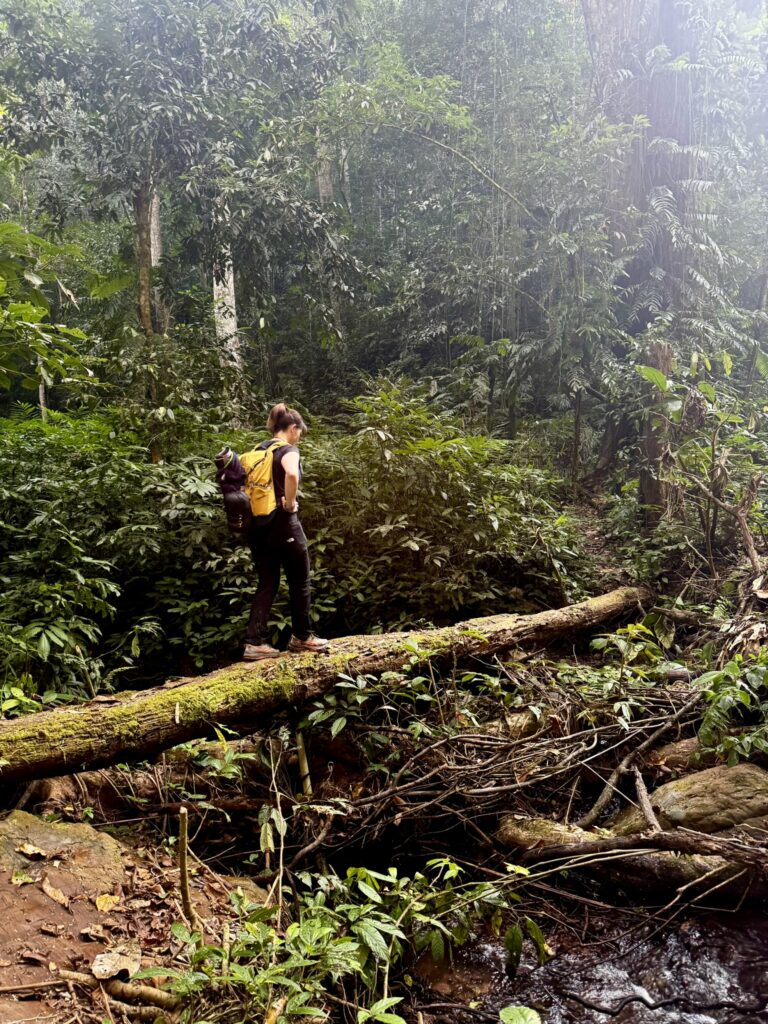
- three day trek in Nam Ho jungle ; overnight camping in banana shelter inside the jungle, etnic village
- recovery and transportation to Nong Khiew
- Nong Khiew – 3 days
- scooter: Nong Khiew and surrounding areas
- Muang Ngoy + overnight camping on top of a local mountain. Sun rise panorama view
- Transfer to Luang Prabang
- Vang Vieng – 3 days
- Blue Lagoon (there are nearly 10 to choose from), explore the area with a scooter
- Pha Ngern sun-rise trek, massage in Vang Vieng, ballon or paraglider, chill & recovery
That’s some information in a nutshell. You may read more about Laos itself and our adventures on our blog. We also elaborate on the itinerary and the reasons we decided to choose this route for an off the beaten path Laos exploaration. Read more and learn what to avoid, check interesting places and find out how to dive deeper into Laotian land and culture. Perhaps we may inspire you or show how to do it on your own 🙂